Is Stevia Safe for Diabetics? Benefits, Risks, and Best Brands in India
Is stevia safe for diabetics? Yes — stevia is one of the safest non-nutritive sweeteners available, with a glycemic index of zero and decades of clinical research supporting its use in blood sugar management. It is approved by FSSAI in India and used in thousands of sugar-free products worldwide.
But not every stevia product on the shelf is equal. Here is what diabetics need to know before switching.
What Is Stevia?
Stevia is a natural sweetener extracted from the leaves of Stevia rebaudiana, a plant native to South America. The active compounds — steviol glycosides (mainly Reb A) — are 200–350 times sweeter than sugar with zero calories and zero glycemic impact.
Unlike artificial sweeteners synthesised in a lab, stevia is plant-derived. Unlike maltitol, it does not raise blood glucose.
Stevia and Blood Sugar: What the Research Says
Multiple studies confirm stevia's safety for diabetics:
- A 2010 study in Appetite found that stevia consumption before meals reduced post-meal glucose and insulin levels compared to sucrose.
- The WHO and FDA have both established an acceptable daily intake (ADI) of steviol glycosides at 4 mg per kg of body weight — far above what anyone consumes from normal sweetening.
- A 2020 meta-analysis found no adverse effects on HbA1c, fasting glucose, or insulin sensitivity from stevia use in diabetic patients.
For a 70 kg adult, the ADI translates to roughly 28 packets of stevia per day. If you are using 2–3 per day in chai, you are well within safe limits.
Stevia vs Other Sweeteners for Diabetics
| Sweetener | Glycemic Index | Calories | Diabetic Safe? |
|---|---|---|---|
| Stevia | 0 | 0 | Yes |
| Erythritol | 0 | 0.2 kcal/g | Yes |
| Monk fruit | 0 | 0 | Yes |
| Maltitol | 35–52 | 2.1 kcal/g | Use sparingly |
| Sucralose | 0 | 0 | Yes, but artificial |
| Table sugar | 65 | 4 kcal/g | No |
Stevia, erythritol, and monk fruit form the "clean trio" we recommend for daily diabetic use. Maltitol is the one to avoid — it is in most Indian "sugar free" chocolates and biscuits.
How to Choose Stevia in India
Not all stevia products are pure. Watch for these traps:
Trap 1: Stevia Blended with Maltitol
Some "stevia" powders list stevia third after maltitol and erythritol. The front label says stevia; the glycemic impact comes from maltitol.
Trap 2: Stevia + Aspartame Tablets
Blue packet sweeteners often combine stevia with aspartame or sucralose. Fine occasionally, but not ideal for daily cooking.
Trap 3: "Stevia Drops" with Fillers
Liquid stevia drops sometimes contain glycerine, preservatives, or artificial flavours. Check the ingredient list.
What Good Stevia Looks Like
- Ingredient 1: Steviol glycosides or stevia leaf extract (Reb A)
- Carrier (optional): Erythritol or inulin — both zero GI
- No maltitol, no aspartame, no sucralose
Best Stevia Sweeteners on Amazon India
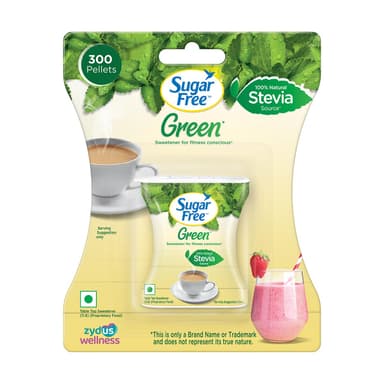
Sugar Free Green — Most Reviewed
The highest-rated stevia powder in India. Pure steviol glycosides with erythritol as carrier — 7,800+ Amazon reviews.
 Sweeteners
Sugar Free Green 100% Natural Stevia Sweetener Powder
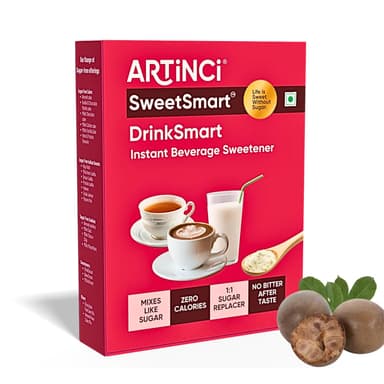
Artinci DrinkSmart — Best for Baking
Stevia + erythritol blend designed for hot beverages and Western baking. Dissolves without the bitter aftertaste pure stevia sometimes leaves.
 Sweeteners
Artinci DrinkSmart Zero Calorie Stevia & Erythritol Sweetener
How Much Stevia Should Diabetics Use?
Stevia is 200–350x sweeter than sugar, so you need far less:
| Use Case | Sugar Amount | Stevia Equivalent |
|---|---|---|
| 1 cup chai | 1 tsp sugar | 1/4 tsp stevia powder |
| Baking (1 cup sugar) | 1 cup | 1 tsp stevia + 1 cup erythritol |
| Smoothie | 1 tbsp honey | 2–3 drops liquid stevia |
For baking, never substitute stevia 1:1 for sugar — it will not provide bulk or structure. Use a stevia-erythritol blend like DrinkSmart instead.
Side Effects: Is There a Downside?
Stevia is generally well-tolerated. Rare issues include:
- Bitter aftertaste — more common with cheap or impure stevia extracts. Premium Reb A extracts (like Sugar Free Green) minimise this.
- Digestive sensitivity — erythritol carriers can cause mild bloating above 50g per day. Normal sweetening amounts (1–5g) are fine.
- Allergic reaction — extremely rare. People allergic to plants in the Asteraceae family (ragweed, daisies) should test cautiously.
No credible study links stevia to cancer, infertility, or organ damage at normal consumption levels.
Conclusion
Stevia is safe for diabetics — it has zero glycemic impact, zero calories, and strong clinical backing. Use a pure stevia or stevia-erythritol product without maltitol, start with small amounts in chai or coffee, and switch to a blend for baking.
For a full comparison of every sweetener type, read our sugar free sweeteners guide and stevia vs monk fruit vs erythritol. Chai dosing: sugar free sweetener for chai. Why to avoid maltitol: is maltitol bad for diabetics.